
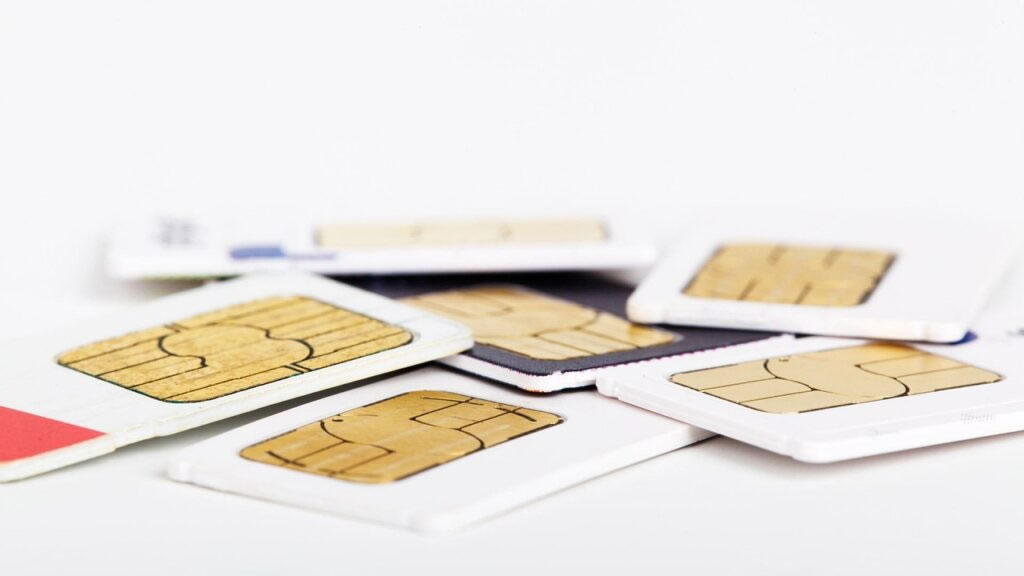
Contact chip cards—widely used in banking, healthcare, identity verification, and access control—rely on physical contact between metal contacts and card readers to transmit data. Unlike contactless cards, their performance hinges on stable mechanical and electrical connections, making data transmission stability a critical quality metric. From chip selection to final testing, every manufacturing process step directly impacts whether the card can reliably communicate with readers over its lifespan. Below, we break down the core processes of contact chip card manufacturing and explore how to ensure data transmission stability at each stage.
1. Chip Selection: The Foundation of Stable Data Transmission
The chip is the “brain” of a contact chip card, responsible for data storage, encryption, and signal processing. Its performance directly determines the card’s data transmission reliability.
Key Considerations:
- Contact Interface Compatibility: Chips must comply with international standards such as ISO/IEC 7816, which specifies contact dimensions, pin definitions (e.g., VCC, RST, CLK, I/O), and communication protocols. Non-compliant chips may fail to establish stable connections with standard readers.
- Anti-Interference Capability: Industrial or high-electromagnetic environments (e.g., near motors or power equipment) demand chips with strong noise resistance. Features like built-in error-correction algorithms or voltage fluctuation tolerance prevent data corruption during transmission.
- Operating Temperature Range: Chips should withstand the temperature extremes of real-world use (typically -25°C to 85°C). Low-quality chips may experience signal loss or data errors in hot or cold environments, such as outdoor payment terminals in summer or winter.
Quality Control:
Manufacturers conduct pre-production chip validation, testing communication stability across different readers and environments to eliminate underperforming chips early.
2. Contact Pad Design & Fabrication: Ensuring Reliable Physical Connection
The metal contact pads on the card’s surface are the “bridge” for data transmission. Poorly designed or manufactured contacts are the leading cause of unstable connections, including intermittent reading, signal drops, or complete communication failure.
Key Processes:
- Material Selection: Contact pads are typically made of copper or brass, plated with gold, nickel, or palladium to enhance conductivity, corrosion resistance, and wear resistance. Gold plating (2-5μm thick) is preferred for high-end cards (e.g., credit cards) due to its excellent conductivity and resistance to oxidation.
- Dimensional Precision: ISO 7816 mandates strict contact dimensions: 2.5mm × 3.5mm for each pad, with precise spacing between pins (e.g., 0.76mm between adjacent pads). Deviations can cause misalignment with reader contacts, leading to partial or no connection.
- Surface Flatness: The contact area must be smooth (Ra ≤ 0.8μm) to ensure full contact with the reader’s probes. Even minor burrs, scratches, or uneven plating can create air gaps, increasing contact resistance and disrupting signal transmission.
Quality Control:
Automated optical inspection (AOI) systems check for plating uniformity, scratches, or dimensional errors. Mechanical testing simulates thousands of insertions to verify wear resistance—pads must maintain conductivity after 10,000+ cycles.
3. Chip Bonding: Securing the “Brain” to the “Bridge”
Chip bonding connects the chip’s internal circuits to the external contact pads, a process requiring micron-level precision. Weak or poorly conductive bonds lead to signal loss or intermittent connectivity.
Key Techniques:
- Wire Bonding: Thin gold or aluminum wires (25-50μm diameter) connect the chip’s bonding pads to the card’s contact pads. This method is cost-effective but demands strict control over wire tension and bonding pressure to avoid wire breakage or weak adhesion.
- Flip-Chip Bonding: The chip is flipped to directly bond its solder bumps to the contact pads, eliminating wires and reducing signal loss. This technique offers higher conductivity and mechanical stability but requires advanced alignment tools to ensure bump-to-pad accuracy (±10μm).
- Encapsulation: After bonding, the chip and connections are encapsulated with epoxy resin to protect against physical stress, moisture, and dust. The encapsulant must be thermally stable to avoid warping that could strain bonds during card use.
Quality Control:
X-ray inspection and acoustic microscopy detect hidden defects like unbonded wires or voids in solder bumps. Conductivity tests verify that resistance between the chip and contact pads remains below 50mΩ—higher resistance indicates poor bonding.
4. Card Body Lamination: Protecting Internal Components from Deformation
The card body (typically PVC, PET, or ABS) houses the chip and contact structure. Warping, delamination, or material instability can misalign contacts, compress the chip, or damage bonds—all of which disrupt data transmission.
Key Considerations:
- Material Stability: PVC is widely used for its low cost and flexibility, but it must be free of impurities that cause warping. High-quality PVC with low plasticizer migration ensures dimensional stability over time, even in humid (60-80% RH) or fluctuating temperature environments.
- Lamination Pressure & Temperature: Lamination bonds layers of the card body under controlled heat (120-150°C) and pressure (5-15 bar). Uneven pressure can create air bubbles or uneven thickness, while excessive heat may damage the chip or soften contact adhesives.
- Thickness Uniformity: The card’s total thickness (standard 0.76mm) must be consistent across its surface. Thickness variations can cause the card to tilt when inserted into readers, misaligning contacts and weakening connections.
Quality Control:
Post-lamination tests include flatness checks (warpage ≤ 0.5mm per 100mm) and delamination inspections. Cards are also subjected to environmental aging tests (e.g., 500 hours at 60°C/90% RH) to ensure the body remains stable.
5. Data Encoding & Initialization: Ensuring Error-Free Communication Protocols
Before leaving the factory, contact chips are encoded with data (e.g., user IDs, encryption keys) and initialized to communicate with readers via standardized protocols (e.g., T=0 or T=1 for ISO 7816). Improper encoding or protocol mismatches can cause data corruption or failed reader recognition.
Key Processes:
- Protocol Compliance: Encoding equipment must align with the chip’s communication protocol. For example, T=0 (asynchronous half-duplex) is common in banking cards, while T=1 (block-oriented) supports faster data transfer for high-capacity cards. Mismatched protocols lead to “card unreadable” errors.
- Data Integrity Checks: After encoding, cyclic redundancy checks (CRCs) or checksum verifications confirm data accuracy. Faulty encoding—such as bit errors or incomplete data—results in unstable transmission or reader rejection.
- Encryption & Security: For sensitive applications (e.g., payment cards), encoding includes encrypting data with keys (e.g., AES, RSA) to prevent tampering. Weak encryption or key leaks not only compromise security but can also disrupt transmission if readers detect data anomalies.
6. Final Testing: Validating Stability in Real-World Scenarios
Even with rigorous in-process controls, final testing simulates real-world usage to ensure every card meets performance standards.
Critical Tests:
- Contact Resistance Test: Measures resistance between the card’s contacts and a test probe (target: ≤ 100mΩ). High resistance indicates poor conductivity, often caused by oxidation, plating defects, or bonding issues.
- Communication Stability Test: Cards are inserted into multiple reader models (different manufacturers, ages, or wear levels) to verify consistent data transmission at varying insertion speeds and angles. Failures here signal compatibility issues.
- Environmental Stress Testing: Cards undergo temperature cycling (-20°C to 60°C), humidity exposure (95% RH), and mechanical stress (bending, torsion) to simulate years of use. Post-test communication checks ensure stability isn’t degraded by environmental factors.
- Long-Term Durability Test: Accelerated aging tests simulate 5+ years of use, including 50,000 insertions and exposure to oils, 汗水 (sweat), or cleaning agents. Pads and bonds must maintain conductivity, and data must remain intact.
Conclusion: Stability is Built on Precision and Quality
Data transmission stability in contact chip cards is not accidental—it is the result of meticulous control over every manufacturing process: selecting high-performance chips, fabricating precise and durable contacts, ensuring robust bonding, stabilizing the card body, and validating performance through rigorous testing.
For manufacturers, the key principles are: compliance with international standards (ISO 7816), adoption of high-quality materials and advanced processes (e.g., automated plating, AOI inspection), and a focus on real-world usability. By prioritizing these factors, contact chip cards can deliver reliable, long-lasting data transmission, earning trust in critical applications where stability is non-negotiable.
In an era of growing demand for secure and efficient identification, the manufacturing of contact chip cards remains a blend of engineering precision and quality excellence—where every micron, every layer, and every test ensures that “contact” equals “connection.”
About HUYI RFID
HUYI RFID Technology is an innovative IoT company deeply rooted in the IoT industry, driven by core RFID technology. We integrate product design, R&D, production, and sales into a complete industrial chain. Our product portfolio covers but is not limited to RFID cards, RFID wristbands, RFID tags, RFID labels, and RFID key fobs. We also provide customized solutions such as RFID animal tags, washable and wear-resistant rfid laundry tags, and rfid hotel key cards, alongside high-performance RFID readers and supporting peripherals—from lanyards and card holders to custom printed cards, paper printed materials, and packaging products—fulfilling customers’ one-stop procurement needs comprehensively.